Poland’s largest fashion group has told Bangladesh’s garment industry that it is staying — but it has also drawn a firm line around what it will and will not pay for.
LPP SA and the Bangladesh Garment Manufacturers and Exporters Association (BGMEA) issued a joint statement on Tuesday, August 11, ending nearly two weeks of uncertainty about whether the Polish retailer would withdraw from a sourcing market valued at over $700 million annually. The company confirmed its intention to maintain uninterrupted operations in Bangladesh. It also reiterated that it is not legally responsible for the disputed invoices that sparked the controversy.
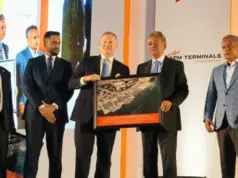
The statement was signed by BGMEA President Mahmud Hasan Khan and Dorota Jankowska-Tomków, LPP’s director of purchasing and ESG. BGMEA Vice President for Finance Mizanur Rahman and LPP’s Bangladesh country manager Anna Staskiewicz signed as witnesses, according to the Dhaka Tribune.
What the two sides actually agreed
The joint declaration does three things.
First, LPP restated its legal position in plain terms: it is neither a debtor nor a party obliged to settle the contested invoices. The company said it continues to pay its own direct suppliers and business partners in Bangladesh on schedule and under agreed contractual terms.
Second, BGMEA acknowledged that position. The association said claims over the unpaid money should be directed at the entities that carry legal liability for them — not at LPP by default.
Third, and this is the most important point for the affected factories, LPP agreed to help. While maintaining its legal position, the company stated it would support a constructive dialogue aimed at a solution. BGMEA Chairman Mahmud Hasan Khan told The Daily Star that he expects the payment to be made gradually, in line with the position LPP shared with the association.
Both organizations also called on the industry and the press to stop interpreting the dispute as a verdict on LPP’s overall conduct in Bangladesh, warning that broad or misleading coverage could harm manufacturers and workers who have nothing to do with the disagreement.
How the dispute reached this point
The trouble traces back to Russia.
When LPP exited the Russian market in 2022, it sold its stake in that business to a separate company, FES Retail. The Polish group says FES has operated independently and on its own account ever since, and carries full responsibility for its own liabilities. The disputed orders, LPP says, were placed and fulfilled during the period when FES was already running as an autonomous business.
Bangladeshi exporters have a different perspective. According to testimonies gathered by The Business Standard, suppliers claim that LPP channeled orders and payments through FES after the war made direct shipments to Russia difficult, and that LPP effectively backed those sales contracts. Initially, invoices were settled normally. However, about eighteen months ago, payments stopped.
After exhausting negotiations, several factory and purchasing house owners took legal action. Two purchasing house owners filed separate lawsuits in the High Court against officials in LPP’s Dhaka office. Prothom Alo reported that police subsequently conducted nighttime raids on the homes of several of those officials.
On July 30, LPP sent a letter to its Bangladeshi suppliers suspending new orders and product development work. The letter indicated that the suspension would remain in place while the company reviewed its future sourcing strategy, a review that would include analyzing production capacity in other countries. On August 5, LPP issued a public statement calling reports of unpaid debts to Bangladeshi factories false and stating that the incident had resulted in its local employees facing accusations and administrative action.
The 11 August joint statement reversed the freeze.
The $40 million figure — and BGMEA’s much smaller number
Almost every report on this story cites $40 million as the sum owed to roughly 40 Bangladeshi exporters and buying houses. It is the number the affected suppliers use, and it has become the shorthand for the whole dispute.
BGMEA’s own review points to something considerably smaller. Speaking to The Financial Express, Mahmud Hasan Khan said that based on the documentation the association had examined, around two dozen factories were unpaid to the tune of $6.9 million.
That is a gap of more than thirty million dollars between the claim and the documented figure, and neither side has publicly reconciled it.
There are some plausible explanations, but none are confirmed. The $40 million could include claims from buying houses and suppliers that failed to submit documentation to the BGMEA or that belong to other trade organizations. Abdul Hamid, president of the Bangladesh Garment Buying Houses Association, told Prothom Alo that nine of its member companies have an outstanding debt of $4.5 million, an amount that wouldn’t necessarily appear in the BGMEA’s factory count. The larger figure could also include claims that are still being verified.
For the factories waiting on payment, the distinction is not academic. Any negotiated settlement will be built on an agreed number, and the two sides are not yet working from the same one.
What is at stake for Bangladesh
LPP is not a marginal buyer. The company sources more than $700 million in garments from Bangladesh annually, and The Daily Star reports that around 722 Bangladeshi companies supply it — heavily concentrated among sweater manufacturers. More than 350 factories were actively working with the brand when the suspension landed.
Bangladesh is also LPP’s main sourcing destination. In December, purchasing director Joanna Sikorska told BGMEA that the company wanted to consolidate its presence in the country, and that LPP planned to increase purchases to around $770 million in the current fiscal year, with orders already placed.
This context explains the alarm generated by the two-week suspension. Suppliers who spoke with Prothom Alo warned that losing a buyer of that size could force factory closures and argued that LPP should not be responsible for the debts of a Russian company.
Not everyone in the industry shares this opinion. Mohammad Hatem, president of the Bangladesh Knitwear Manufacturers and Exporters Association, warned before the joint statement that his organization would blacklist them in Bangladesh if the debts were not settled, and stated that the matter could be escalated to the European Union and international sourcing platforms.
Protection for LPP’s Dhaka staff
One clause in the joint statement has drawn less attention than it deserves. BGMEA committed to working with government ministries, regulators and industry stakeholders to ensure an orderly process — including active steps to shield LPP’s officials and employees from undue pressure, harassment or unfounded legal proceedings.
Read alongside the reported police raids on staff homes, that language is a direct response to how the dispute escalated. It also signals what LPP wanted most from the negotiation: not a payment agreement, but assurance that a commercial disagreement would not become a personal risk for the people running its Dhaka office.
What happens next
The suspension has been lifted, but the underlying problem remains. FES Retail has not paid. LPP maintains that it is not obligated to do so. BGMEA has accepted this legal argument, although it acknowledges that its member factories are experiencing genuine business difficulties.
In the coming weeks, three aspects will need to be monitored: whether the lawsuits filed against LPP’s management in Dhaka are withdrawn, given that LPP had conditioned the start of negotiations on their withdrawal; whether both parties reach an agreement on a verified figure; and whether the dialogue that LPP has committed to facilitating leads to any real progress on the part of FES Retail.
For now, orders are flowing again — which buys everyone time, but settles nothing.